
South Coast Restoration Society Inc.
Stage One Working Bee
Leaves and sticks clean-up
Thursday 19 November 2026
10 am – 3 pm · Queensland time
Heritage Park · 193 Rifle Range Road, Pimpama QLD 4209
On-site lead: Terry Crane. Start at the canteen before beginning any work.
View the 11-zone mapStep 1
Start at the canteen
Sign in, read the safety briefing and sign the attendance sheet before starting. Check in with Terry Crane, our on-site working-bee lead. Forms, hand tools and the first-aid kit are at the canteen. Confirm first-aid arrangements with Terry; a kit does not confirm a trained first aider. Return tools and sign out when leaving.
Step 2
The job today
Rake and collect loose leaves, sticks and small fallen branches in safe, accessible areas. Hand-weed where safe. Put ordinary rubbish in suitable bins. Leave heavy, tangled or sharp material and anything unsafe for Terry to assess. This is Stage One yard clean-up, not structural repairs or alterations.
Step 3
Small piles and larger collection spots
Make small, low, tidy piles no bigger than 2 m × 2 m. Do not keep enlarging them. Larger collection piles may be made only at the two red-marked spots on the map. Rory checked both larger-pile locations on site on 18 November. Use safe carrying routes and stop if conditions are unsafe. Keep piles away from buildings, vehicles, fences, trees and power lines. Keep paths and vehicle/emergency access clear. The map does not establish safe clearances.
Step 4
Tools and safe working
Suitable hand tools (shovels, rakes and picks) and leaf blowers only. Use only if confident. Wear suitable eye and hearing protection for leaf blowers and keep others clear of blowing debris. No chainsaws or other powered tools. Use shovels and picks only for safe surface clean-up, not digging or disturbing buried services.
Step 5
Look after yourself and the park
Wear gloves, enclosed shoes, long pants, a hat and sunscreen. Watch for loose sticks, uneven ground and other trip hazards. Look before reaching into grass or debris; watch for snakes, spiders and other wildlife. Keep loads small and use safe spacing. Do not touch chemicals, drums, cables or electrical equipment. Keep out of unsafe buildings, rifle range structures, the graveyard and restricted areas. Do not move club property, vehicles, signs or heritage items. Stop and tell Terry if unsure or unsafe.
Step 6
What to bring
Bring shovels, rakes, picks or leaf blowers if available. Bring water, a packed lunch and any food needed for your dietary requirements. Drink water regularly and take rest and shade breaks. Leave any task you cannot manage safely.
Step 7
Photos and finishing
Take before-and-after photos where safe. Email them to secretary@southcoastrestorationsocietyinc.org.au with your name, date, location and work completed. Report hazards and unfinished work to Terry. Return tools to the canteen and sign out. Do not change access arrangements or lock anyone in.
Working zones and collection spots
Zones 1–11 guide the clean-up teams. Zone 9 includes the sheds at the right-hand end of the photo. Boundaries are indicative only, not a survey or permission to enter restricted areas.
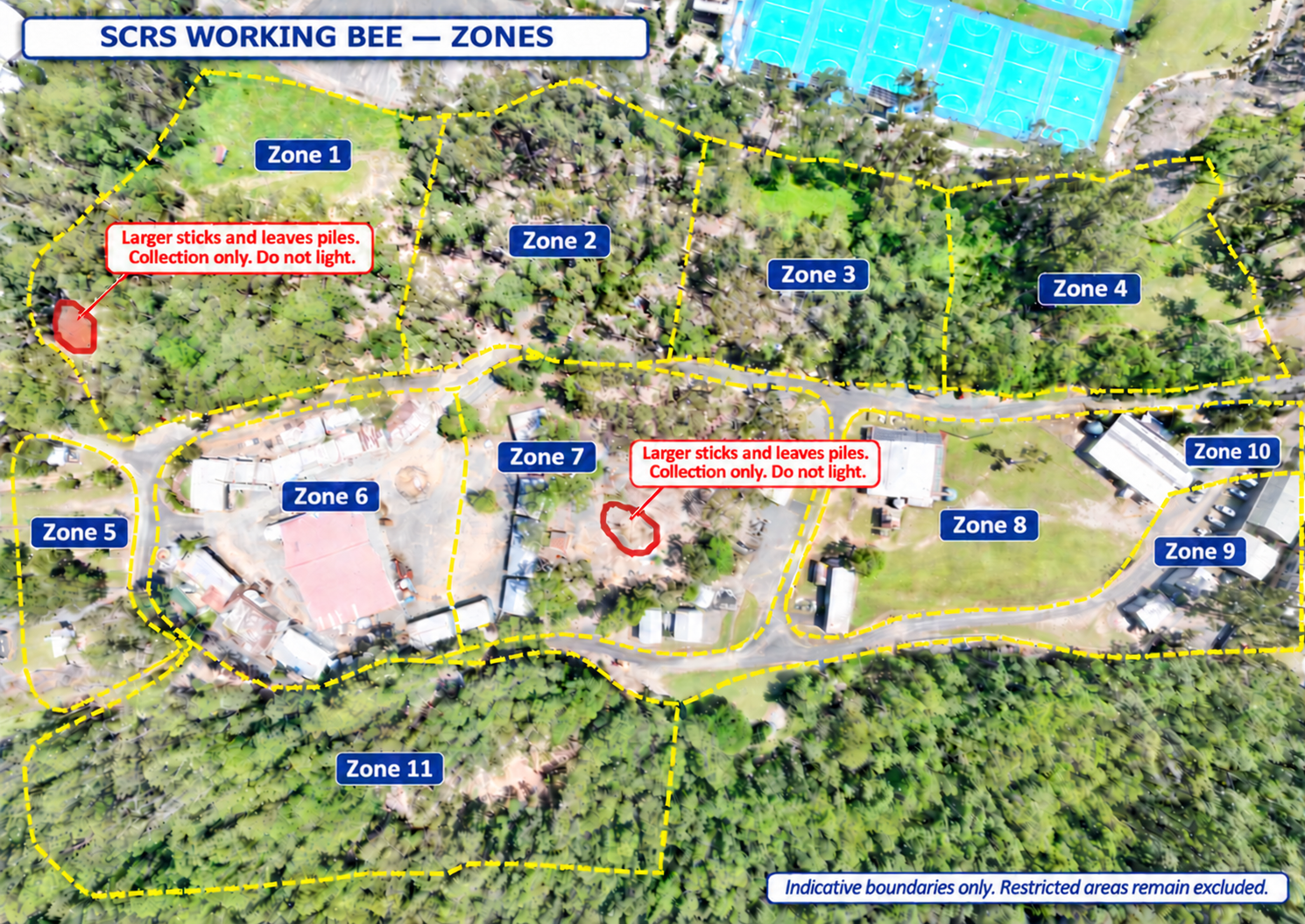
Tap the map to open it full size. Restricted areas remain excluded. Check the real conditions before working.
Both red spots: Larger sticks and leaves piles. Collection only. Do not light.
Safety briefing and acknowledgement
Read the instructions above before starting. By signing the attendance sheet before starting, I record that I have read this briefing, understand the task limits, and know to stop and ask if unsure.
The attendance sheet is at the canteen. Sign before starting and record your time out before leaving.
Emergency: call 000 first, then notify Terry or Rory.
On-site lead: Terry Crane · Secretary: Rory Clark
secretary@southcoastrestorationsocietyinc.org.au